

Cabbage - Mammoth Red Rock seeds
From $299 USDUnit price /UnavailableDescription

- A large heirloom cabbage with deep red heads that have good flavor and are very colorful
-
Days to Maturity | 80-90 days
-
Cabbage Seeds | ❄️ Cabbage is an annual cool-season crop, hardy to frost and light freezes. A smaller cabbage head has better flavor and can stay in the field longer without splitting. To keep them small, plant close together or, when the head is almost full, give the plant a sharp twist to break up the roots. 😀 Cabbage is a wide spreading foliage plant with handsome leaves that form a tight, hard ball head on a strong central stem. Young plants may bolt if grown at 50F for a long time; however mature plants of late varieties improve flavor in cold weather.
Click here for complete Cabbage grow guide
Additional Details
Did you know? Cabbage is an excellent source of vitamin C! It also contains significant amounts of glutamine, an amino acid that has anti-inflammatory properties. Cabbage can also be included in dieting programs, as it is a low calorie food.
- A large heirloom cabbage with deep red heads that have good flavor and are very colorful
-
From $299 USDUnit price /Unavailable
Description

- The Michihili cabbage is a rare Chinese variety that produces a cylindrical, leafy head which measures 16" long and 6" across
- The light green leaves are very tender and delicious
- They are perfect for stir-fry and pickling
- Grows really well in mild climates
-
Days to Maturity | 70 days
-
Cabbage Seeds | Cabbage is an annual cool-season crop, hardy to frost and light freezes. Plant in rows 2 1/2 feet apart, with 12-16 inches between plants.
Click here for complete Cabbage grow guide
Additional Details
Did you know? Cabbage is an excellent source of vitamin C! It also contains significant amounts of glutamine, an amino acid that has anti-inflammatory properties. Cabbage can also be included in dieting programs, as it is a low calorie food.
- The Michihili cabbage is a rare Chinese variety that produces a cylindrical, leafy head which measures 16" long and 6" across

Cabbage - Savoy Perfection seeds
From $299 USDUnit price /UnavailableDescription

- These seeds produce a large drumhead-type cabbage that has finely-wrinkled, savoyed leaves
- They are mild but very sweet in flavor
- Unlike other cabbage, The Savoy Perfection Cabbage does not give off the sulfur smell when it is being cooked
- The heads can weigh up to 8 lbs
- Great for stuffing, steaming, stir fry, and is the key ingredient in Italian minestrone soups
-
Days to Maturity | 65 days
-
Cabbage Seeds | ❄️ Cabbage is an annual cool-season crop, hardy to frost and light freezes. A smaller cabbage head has better flavor and can stay in the field longer without splitting. To keep them small, plant close together or, when the head is almost full, give the plant a sharp twist to break up the roots. 😀 Cabbage is a wide spreading foliage plant with handsome leaves that form a tight, hard ball head on a strong central stem. Young plants may bolt if grown at 50F for a long time; however mature plants of late varieties improve flavor in cold weather.
Click here for complete Cabbage grow guide
Additional Details
Did you know? Cabbage is an excellent source of vitamin C! It also contains significant amounts of glutamine, an amino acid that has anti-inflammatory properties. Cabbage can also be included in dieting programs, as it is a low calorie food.
- These seeds produce a large drumhead-type cabbage that has finely-wrinkled, savoyed leaves
-
Carrot - Amarillo Yellow (8" Long) seeds
From $299 USDUnit price /UnavailableDescription

- Amarillo Yellow heirloom carrot has an 8" long yellow root with bright yellow flesh
- Sweet flavor and extremely tender
- Easy to grow
- Grows well in containers and raised beds
- Very popular variety
-
Days to Maturity | 75 days
- Carrot Seeds | Carrots are an annual cool-season crop, half-hardy to frost and light freezes. Sow seeds evenly in a very shallow furrow, about 1/4 inch deep, and keep seeds moist so they will germinate.
Click here for complete Carrot grow guide
- Amarillo Yellow heirloom carrot has an 8" long yellow root with bright yellow flesh
-
Carrot - Autumn King (10" Long) seeds
From $299 USDUnit price /UnavailableDescription

-
The Autumn King carrot is one of the more popular varieties to grow. Its split-resistant skin turns to a deep dark orangish/red color as it matures.
- One of the largest of carrots! Grows 10" - 12" long
- Easy to grow in sandy soil
- A favorite of many home grower
- Carrots are a sun-loving plants that also like the cold
- Just keep them consistently watered and they'll be happy
-
Days to Maturity | 70 days
-
Carrot Seeds | Carrots are an annual cool-season crop, half-hardy to frost and light freezes. Sow seeds evenly in a very shallow furrow, about 1/4 inch deep, and keep seeds moist so they will germinate.
Click here for complete Carrot grow guide
Additional DetailsCarrot gets its characteristic and bright orange colour from β-carotene, which is metabolised into vitamin A in humans when bile salts are present in the intestines. Carrots are also rich in dietary fibre, antioxidants, and minerals.
-
The Autumn King carrot is one of the more popular varieties to grow. Its split-resistant skin turns to a deep dark orangish/red color as it matures.

Carrot - Chantenay (5" Long) seeds
From $299 USDUnit price /UnavailableDescription

- Plant produces high yields of 5 ½" long orange carrots
- Rarely splits
- Grows well in winter
- Easy to grow
- Perfect for home gardens or market growers
-
Days to Maturity | 70 days
- Carrot Seeds | Carrots are an annual cool-season crop, half-hardy to frost and light freezes. Sow seeds evenly in a very shallow furrow, about 1/4 inch deep, and keep seeds moist so they will germinate.
Click here for complete Carrot grow guide
Additional DetailsCarrot gets its characteristic and bright orange colour from β-carotene, which is metabolised into vitamin A in humans when bile salts are present in the intestines. Carrots are also rich in dietary fibre, antioxidants, and minerals.
- Plant produces high yields of 5 ½" long orange carrots
-
Carrot - Kuroda (8" Long) seeds
From $299 USDUnit price /UnavailableDescription

- Plant produces high yields of flavorful 8" long orangish red carrots.
- Very popular asian carrot.
- Suitable for home garden or market growers.
- Grows well in raised beds and compact spaces.
-
Days to Maturity | 70 days
- Carrot Seeds | Carrots are an annual cool-season crop, half-hardy to frost and light freezes. Sow seeds evenly in a very shallow furrow, about 1/4 inch deep, and keep seeds moist so they will germinate.
Click here for complete Carrot grow guide
Additional Details
Carrot gets its characteristic and bright orange colour from β-carotene, which is metabolised into vitamin A in humans when bile salts are present in the intestines. Carrots are also rich in dietary fibre, antioxidants, and minerals.
- Plant produces high yields of flavorful 8" long orangish red carrots.
-
Carrot - Little Fingers (4" Long) seeds
From $299 USDUnit price /UnavailableDescription

-
The Little Finger carrots are one of the quickest to grow.
- 4" cylindrical roots
- Tender and sweet variety
- Many can be grown in a small space
- Carrots are a sun-loving plants that also like the cold.
- Just keep them consistently watered and they'll be happy.
-
Days to Maturity | 55 days
- Carrot Seeds | Carrots are an annual cool-season crop, half-hardy to frost and light freezes. Sow seeds evenly in a very shallow furrow, about 1/4 inch deep, and keep seeds moist so they will germinate.
Click here for complete Carrot grow guide
Additional Details
Carrot gets its characteristic and bright orange colour from β-carotene, which is metabolised into vitamin A in humans when bile salts are present in the intestines. Carrots are also rich in dietary fibre, antioxidants, and minerals.
-
The Little Finger carrots are one of the quickest to grow.
-
Carrot - Tendersweet (7" Long) seeds
From $299 USDUnit price /UnavailableDescription
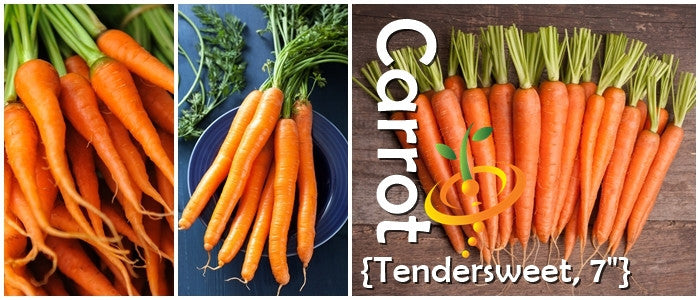
- One of the sweetest and best tasting carrots you can grow!
- Skinny 7" tapered roots
- Easy to grow
- Carrots are a sun-loving plants that also like the cold.
- Just keep them consistently watered and they'll be happy.
-
Days to Maturity | 70 days
- Carrot Seeds | Carrots are an annual cool-season crop, half-hardy to frost and light freezes. Sow seeds evenly in a very shallow furrow, about 1/4 inch deep, and keep seeds moist so they will germinate.
Click here for complete Carrot grow guide
Additional Details
Carrot gets its characteristic and bright orange colour from β-carotene, which is metabolised into vitamin A in humans when bile salts are present in the intestines. Carrots are also rich in dietary fiber, antioxidants, and minerals.
- One of the sweetest and best tasting carrots you can grow!
-
Cauliflower - All Year Round seeds
From $299 USDUnit price /UnavailableDescription

- This Cauliflower variety produces large white heads and surrounded by dark green leaves
- Continues to grow well for a long time
- Suitable for successional sowing all year round
-
Days to Maturity | 65 days
- Cauliflower is an annual cool-season crop, half-hardy to frost and light freezes. Plant in rows 2 1/2 to 3 feet apart, with 2 feet between plants.
Click here for complete Cauliflower grow guide
-
From $299 USDUnit price /Unavailable
Description

- The Igloo Cauliflower produces snowball type white heads
- Produces large dense leaves that protect the solid white heads from frost
- Excellent variety for the cooler months
- Days to Maturity | 65-70 days
-
Cauliflower Seeds | Cauliflower is an annual cool-season crop, half-hardy to frost and light freezes. Plant in rows 2 1/2 to 3 feet apart, with 2 feet between plants.
Click here for complete Cauliflower grow guide

Cauliflower - Self-Blanche/Snowball seeds
From $299 USDUnit price /UnavailableDescription
Snowball Cauliflower seeds produce large, pristine white heads reaching approximately 7 inches across. These self-blanching varieties feature smooth, creamy curds protected by abundant outer leaves, eliminating the need for manual blanching. Known for exceptional reliability and heavy yields, Snowball is a trusted choice for both novice and experienced gardeners. The plants mature in about 65 days, delivering consistent, restaurant-quality heads perfect for fresh eating, roasting, or storage. A dependable garden staple that rarely disappoints.
- Snowball Cauliflowers are large (appx. 7" across)
- Smooth textured with white heads and large leaves
- This popular variety is an extremely dependable crop with heavy yields
- Popular amongst all gardeners
- Days to Maturity | 65 days
-
Cauliflower - Snowball/Self-blanche (White) seeds
From $299 USDUnit price /UnavailableDescription

- The Self-Blanche Cauliflower produces flavorful snow ball type cauliflower
- Plant early as it stops growing when it gets hot
- The leaves curl upward and cover head to keep sun from ruining white color
-
Days to Maturity | 65 days
-
Cauliflower Seeds | Cauliflower is an annual cool-season crop, half-hardy to frost and light freezes. Plant in rows 2 1/2 to 3 feet apart, with 2 feet between plants.
Click here for complete Cauliflower grow guide
- The Self-Blanche Cauliflower produces flavorful snow ball type cauliflower
-
Tomato - Beefsteak, Ponderosa Red (Indeterminate) seeds
From $299 USDUnit price /UnavailableDescription

The Ponderosa Red Beefsteak Tomato produces meaty, bright red fruit with mild, sweet flavor. This low-acid ribbed slicer has very few seeds, so there’s more flesh to savor. Strong vines support heavy production, so stake well. Eat them any way you can think of.- Old-fashioned tomato flavor
- High yields
- Low acidity
- Good fresh or cooked
SEED PLANTING TIPS
- Botanical name: Solanum lycopersicum
- Growth type: Indeterminate, trellis support, regular pruning
- Tomato size: Large
- Depth to plant seeds: .25" deep
- Spacing between plants: 24"-36" apart
- Spacing between rows: 36"-48" apart
- Days to germinate (sprout): 7-14 days
- Germination soil temps: 75F-95F
- Soil needs: 6.0-6.5 pH
- Sun needs: Full sun
- Frost hardy: No
- Planting season: Spring, summer
- # of plants per sq. ft.: Appx. 1 plant per 3 sq. ft.
- Days to maturity: 75-80 days
Click here to view our full Tomato grow guide
Good companion plants: Basil, Borage, Onion, Parsley, Pepper
-
From $299 USDUnit price /Unavailable
Description

- A beautiful and delicious turnip with white/golden color and amazing flavor.
- The quality and tenderness is best when harvested at 3”.
- Plants grow best in early spring or late summer to fall.
- Days to Maturity | 55 days
- A beautiful and delicious turnip with white/golden color and amazing flavor.
-
From $299 USDUnit price /Unavailable
Description

- Popular and early "Icebox" variety produces uniform 8" round heirloom watermelons
- Each fruit weighs appx. 8 - 12 lb
- Drought resistant variety
- Thrives in hot temperatures and direct sun
-
Days to Maturity | 75 days
-
Best Months to Plant | [April - June] Watermelons are heat-loving plants that need lots of sun. They grow on a long vine, so make sure to give them plenty of space to roam around.
- Popular and early "Icebox" variety produces uniform 8" round heirloom watermelons

Bean, Runner/Pole - White Emergo seeds
From $299 USDUnit price /UnavailableDescription
The White Emergo Runner Pole Bean twinkles with lots of sweet white flowers, which may be why it’s also known as Sweet White Runner Bean. Vigorous vines can grow to 10' to support long 8"-12" pods with creamy white beans inside. Pick young for snap beans and mature for shell beans, or let them dry for a bean similar to cannellini.
- Easy to grow
- Tasty white beans
- Long pods up to 8"-12”
- Eat fresh, shelled, or dried
SEED PLANTING TIPS
- Botanical name: Phaseolus coccineus
- Depth to plant seeds: 1" deep
- Spacing between plants: 5" apart
- Spacing between rows: 18"-24" apart
- Days to germinate (sprout): 8-14 days
- Germination soil temps: 70F-85F
- Soil needs: 6.0-7.0 pH
- Sun needs: Full sun
- Frost hardy: No
- Planting season: Spring, summer
- # of plants per sq. ft.: Appx. 4 plants per sq. ft.
- Days to maturity: 80-115 days
Click here to view our full Bean grow guide
Good companion plants: Cucumber, Pea, Rosemary, Thyme, Tomato
-
From $299 USDUnit price /Unavailable
Description
Brunswick cabbage is a classic heirloom variety prized for its dense, flavorful heads and exceptional storage capabilities. This cold-hardy cultivar produces medium to large, blue-green heads with a distinctive drumhead shape, ideal for fresh eating, coleslaw, and fermentation. Known for its reliability and disease resistance, Brunswick thrives in cool-season gardens and develops superior flavor after light frost. Direct sow in spring or late summer for fall harvest. A dependable choice for gardeners seeking traditional cabbage quality and extended harvest potential.
Cabbage, Brunswick
- Brassica oleracea.
- A heirloom variety dating back to 1924.
- Plant produces a large drumhead type cabbage.
- Used for making kraut.
- Suitable for spring, summer, and fall crops.
- Stores well. Suitable for home gardens and market growers.
Click here for complete Cabbage grow guideAdditional Details
Did you know? ❄️ Cabbage is an annual cool-season crop, hardy to frost and light freezes. A smaller cabbage head has better flavor and can stay in the field longer without splitting. To keep them small, plant close together or, when the head is almost full, give the plant a sharp twist to break up the roots. 😀 Cabbage is a wide spreading foliage plant with handsome leaves that form a tight, hard ball head on a strong central stem. Young plants may bolt if grown at 50F for a long time; however mature plants of late varieties improve flavor in cold weather.
-
Tomato - Delicious (Indeterminate) seeds
From $299 USDUnit price /UnavailableDescription
The Delicious Tomato has been known to produce huge 2-3 lb beefsteak tomatoes. This delightful slicer is solid, meaty, and juicy with a small seed core. No surprise that one of these grew to 7 lb, 12 oz, and held a 28-year world record for largest tomato. The typical size is 1-2 lbs, but stake well in case a record breaker grows on one of your vines.
- Extra large fruit
- Juicy and meaty
- Small seed core
- Delicious flavor
SEED PLANTING TIPS
- Botanical name: Solanum lycopersicum
- Growth type: Indeterminate, trellis support, regular pruning
- Tomato size: Large to Extra-Large
- Depth to plant seeds: .25" deep
- Spacing between plants: 24"-36" apart
- Spacing between rows: 36"-48" apart
- Days to germinate (sprout): 7-14 days
- Germination soil temps: 75F-95F
- Soil needs: 6.0-6.5 pH
- Sun needs: Full sun
- Frost hardy: No
- Planting season: Spring, summer
- # of plants per sq. ft.: Appx. 1 plant per 3 sq. ft.
- Days to maturity: 75-80 days
Click here to view our full Tomato grow guide
Good companion plants: Basil, Borage, Onion, Parsley, Pepper
-
Tomato - Egg (Indeterminate) seeds
From $299 USDUnit price /UnavailableDescription
- Plant produces good yields of egg shaped tomatoes.
- The tomatoes are the size and shape of an egg.
- A firm tomato that keeps well. Does well in poor growing conditions.
SEED PLANTING TIPS
- Botanical name: Solanum lycopersicum
- Growth type: Indeterminate, trellis support, regular pruning
- Tomato size: Small
- Depth to plant seeds: 1/8" deep
- Spacing between plants: 24" apart
- Spacing between rows: 36"-48" apart
- Days to germinate (sprout): 7-14 days
- Germination soil temps: 75F-95F
- Soil needs: 6.0-6.5 pH
- Sun needs: Full sun
- Frost hardy: No
- Planting season: Spring, summer
- # of plants per sq. ft.: Appx. 1 plant per 2 sq. ft.
- Days to maturity: 75-80 days
Click here to view our full Tomato grow guide
Good companion plants: Basil, Borage, Onion, Parsley, Pepper
- Plant produces good yields of egg shaped tomatoes.
-
Bean, Bush - Royal Burgundy seeds
From $299 USDUnit price /UnavailableDescription
The Royal Burgundy Bush Bean has so many things going for it—colorful, beautiful, tasty, plentiful, long-producing—but the coolest thing is that it grows in cool weather. Dark purple 5"-6" pods produced high on the plant make for a doubly easy harvest. When cooked, watch them change color from royal purple to royal green.
- Easy to grow
- High yields
- Continuous production throughout growing season
- Grows in cool weather
SEED PLANTING TIPS
- Botanical name: Phaseolus vulgaris
- Depth to plant seeds: 1" deep
- Spacing between plants: 4" apart
- Spacing between rows: 18"-24" apart
- Days to germinate (sprout): 5-10 days
- Germination soil temps: 70F-85F
- Soil needs: 6.0-7.0 pH
- Sun needs: Full sun
- Frost hardy: No
- Planting season: Spring, summer, fall
- # of plants per sq. ft.: Appx. 4 plants per sq. ft.
- Days to maturity: 50-55 days
Click here to view our full Bean grow guide
Good companion plants: Cucumber, Pea, Rosemary, Thyme, Tomato
-
Bean, Runner/Pole - Scarlet Runner seeds
From $299 USDUnit price /UnavailableDescription

The Scarlet Runner Pole Bean is just about as traditional a vegetable you can grow in your garden. Named for its showy red hummingbird attractors (flowers) it puts out on 6'-8' vines that will grow on fences, trellises, and yes, poles. This high-yielding runner bean produces foot-long pods with speckled red-purple beans, but pick them sooner for best flavor. Tolerates heat and drought, and doesn’t mind cool nights.
- Easy to grow
- Heat tolerant
- Long pods up to 8"-12”
- Eat fresh, shelled, or dried
SEED PLANTING TIPS
- Botanical name: Phaseolus coccineus
- Depth to plant seeds: 1" deep
- Spacing between plants: 5" apart
- Spacing between rows: 18"-24" apart
- Days to germinate (sprout): 8-14 days
- Germination soil temps: 70F-85F
- Soil needs: 6.0-7.0 pH
- Sun needs: Full sun
- Frost hardy: No
- Planting season: Spring, summer
- # of plants per sq. ft.: Appx. 4 plants per sq. ft.
- Days to maturity: 65-75 days
Click here to view our full Bean grow guide
Good companion plants: Cucumber, Pea, Rosemary, Thyme, Tomato
-
Bean, Bush - Slenderette seeds
From $299 USDUnit price /UnavailableDescription
The Slenderette Bush Bean is a sleek French-type green bean. A vigorous grower that produces high yields of slim 5" long stringless pods on a compact plant. This sweet, juicy, tender, crunchy bean would taste great in a European thin/thick bean salad served alongside wider Roma II Italian beans.
- Easy to grow
- Stringless variety
- Sweet, juicy, tender, and crunchy
- High yields
SEED PLANTING TIPS
- Botanical name: Phaseolus vulgaris
- Depth to plant seeds: 1" deep
- Spacing between plants: 4" apart
- Spacing between rows: 18"-24" apart
- Days to germinate (sprout): 5-10 days
- Germination soil temps: 70F-85F
- Soil needs: 6.0-7.0 pH
- Sun needs: Full sun
- Frost hardy: No
- Planting season: Spring, summer, fall
- # of plants per sq. ft.: Appx. 4 plants per sq. ft.
- Days to maturity: 50-55 days
Click here to view our full Bean grow guide
Good companion plants: Cucumber, Pea, Rosemary, Thyme, Tomato
-
Cabbage - Early Jersey Wakefield seeds
From $299 USDUnit price /UnavailableDescription
- These seeds produces good yields of 2 lb heads of cabbage in the shape of a cone.
- Excellent flavor and very sweet.
- Open pollinated heirloom variety.
-
Days to Maturity | 65-75 days
-
Cabbage Seeds | ❄️ Cabbage is an annual cool-season crop, hardy to frost and light freezes. A smaller cabbage head has better flavor and can stay in the field longer without splitting. To keep them small, plant close together or, when the head is almost full, give the plant a sharp twist to break up the roots. 😀 Cabbage is a wide spreading foliage plant with handsome leaves that form a tight, hard ball head on a strong central stem. Young plants may bolt if grown at 50F for a long time; however mature plants of late varieties improve flavor in cold weather.
Click here for complete Cabbage grow guide
Did you know? Cabbage is an excellent source of vitamin C! It also contains significant amounts of glutamine, an amino acid that has anti-inflammatory properties. Cabbage can also be included in dieting programs, as it is a low calorie food.
- These seeds produces good yields of 2 lb heads of cabbage in the shape of a cone.
-
Shungiku, Edible Chrysanthemum seeds
From $299 USDUnit price /UnavailableDescription
Shungiku is a versatile Asian green prized for its delicate, slightly peppery leaves and edible flowers. Also known as Garland Chrysanthemum or Chop Suey Greens, this cool-season crop thrives in winter and spring gardens, reaching maturity in 30–50 days. Harvest tender leaves fresh for salads, stir-fries, and Asian dishes. The flowers can be dried and brewed into a soothing herbal tea with stomach-calming properties, offering a natural alternative to chamomile. Easy to grow and highly productive, Shungiku brings authentic Asian flavor and dual-purpose harvests to any garden.
- Shungiku, Edible Chrysanthemum is a very versatile asian green.
- Known as Shungiku, Edible Chrysanthemum, Garland Chrysanthemum, Chop Suey Greens and many other names.
- This is a salad green that can be grown in winter and again in spring.
- The flowers of Shungiku can be dried and stored to be used for tea. Often considered a substitute for Chamomile - with its soothing and stomach quieting properties.
- Days to Maturity | 30 - 50 days
- Shungiku, Edible Chrysanthemum is a very versatile asian green.
-
Cabbage - Glory Of Enkhuizen seeds
From $299 USDUnit price /UnavailableDescription
-
These seeds produces a medium-to-large hard round heads of cabbage
- Suitable for spring, summer, and fall crops
- Cold hardy
- Stores well. Suitable for home gardens and market growers
- Perfect for Kraut recipes
-
Days to Maturity | 90 days
-
Cabbage Seeds | ❄️ Cabbage is an annual cool-season crop, hardy to frost and light freezes. A smaller cabbage head has better flavor and can stay in the field longer without splitting. To keep them small, plant close together or, when the head is almost full, give the plant a sharp twist to break up the roots. 😀 Cabbage is a wide spreading foliage plant with handsome leaves that form a tight, hard ball head on a strong central stem. Young plants may bolt if grown at 50F for a long time; however mature plants of late varieties improve flavor in cold weather.
Click here for complete Cabbage grow guide
Additional Details
Did you know? Cabbage is an excellent source of vitamin C! It also contains significant amounts of glutamine, an amino acid that has anti-inflammatory properties. Cabbage can also be included in dieting programs, as it is a low calorie food.
-
These seeds produces a medium-to-large hard round heads of cabbage
-
Carrot - Nutri-Red (9" Long) seeds
From $299 USDUnit price /UnavailableDescription
-
The Nutri-Red carrot is a brilliant red color with a tinge of orange .
- 9" long slim tapered ends.
- Excellent for stews and many culinary creations.
- Tender and very sweet with a strong carrot flavor.
- Carrots are a sun-loving plants that also like the cold.
- Just keep them consistently watered and they'll be happy.
-
Day to Maturity | 75 days
- Carrot Seeds | Carrots are an annual cool-season crop, half-hardy to frost and light freezes. Sow seeds evenly in a very shallow furrow, about 1/4 inch deep, and keep seeds moist so they will germinate.
Click here for complete Carrot grow guide
Additional DetailsCarrot gets its characteristic and bright orange colour from β-carotene, which is metabolised into vitamin A in humans when bile salts are present in the intestines. Carrots are also rich in dietary fibre, antioxidants, and minerals.
Follow SeedsNow.com's board Carrots on Pinterest. -
The Nutri-Red carrot is a brilliant red color with a tinge of orange .
-
Bean, Pole - Purple Podded seeds
From $299 USDUnit price /UnavailableDescription
The Purple Podded Pole Bean produces a profuse plurality of purely purple pods. View this variety vegetate vigorous verdant vines with violet developments. Stringless shells surround savory seeds.
- Easy to grow
- High yielding
- Long pods up to 7"
- Easy to harvest
SEED PLANTING TIPS
- Botanical name: Phaseolus vulgaris
- Depth to plant seeds: 1" deep
- Spacing between plants: 5" apart
- Spacing between rows: 18"-24" apart
- Days to germinate (sprout): 8-14 days
- Germination soil temps: 70F-85F
- Soil needs: 6.0-7.0 pH
- Sun needs: Full sun
- Frost hardy: No
- Planting season: Spring, summer
- # of plants per sq. ft.: Appx. 4 plants per sq. ft.
- Days to maturity: 70-75 days
Click here to view our full Bean grow guide
Good companion plants: Cucumber, Pea, Rosemary, Thyme, Tomato
-
Bean, Fava/Broad - Aguadulce seeds
From $299 USDUnit price /UnavailableDescription
The Aguadulce Fava Bean is a cold hardy broadbean that can also take a bit of heat. This 4' bush-type plant produces charming white and black flowers that turn into huge green pods with huge, creamy, nutty, protein-rich beans inside. Known as a dried bean, it’s also delicious when eaten fresh from the pod. With its edible leaves, high yields, and nitrogen-fixing properties, this is a gorgeous performer for fall and winter gardens in all grow zones.
- Easy to grow
- Cold hardy to 20 degrees F
- Nitrogen fixer
- Great for winter gardens
SEED PLANTING TIPS
- Botanical name: Vicia faba
- Depth to plant seeds: 2" deep
- Spacing between plants: 4"-6" apart
- Spacing between rows: 18"-24" apart
- Days to germinate (sprout): 10-14 days
- Germination soil temps: 50F-65F
- Soil needs: 6.0-7.0 pH
- Sun needs: Full sun
- Frost hardy: Yes
- Planting season: Spring, fall, winter
- # of plants per sq. ft.: Appx. 2-4 plants per sq. ft.
- Days to maturity: 75-80 days when spring sown, 180 days when fall sown
Click here to view our full Bean grow guide
Good companion plants: Cabbage, Carrot, Lettuce, Parsley, Rosemary

Cauliflower - Violetta (Purple) seeds
From $299 USDUnit price /UnavailableDescription
- This Cauliflower variety produces large purple heads and surrounded by dark green leaves
- Continues to grow well for a long time
- Suitable for successional sowing all year round -
Days to Maturity | 65 days
-
Cauliflower Seeds | Cauliflower is an annual cool-season crop, half-hardy to frost and light freezes. Plant in rows 2 1/2 to 3 feet apart, with 2 feet between plants.
Click here for complete Cauliflower grow guide
- This Cauliflower variety produces large purple heads and surrounded by dark green leaves
-
Carrot - St. Valery/James Scarlet (12" Long) seeds
From $299 USDUnit price /UnavailableDescription
- Old French variety that produces extremely sweet and delicious carrots up to 12” in length
- Tender, sweet, and smooth roots
-
Also known as the “James Scarlet”
-
Days to Maturity | 70 days
-
Carrot Seeds | Carrots are an annual cool-season crop, half-hardy to frost and light freezes. Sow seeds evenly in a very shallow furrow, about 1/4 inch deep, and keep seeds moist so they will germinate.
Click here for complete Carrot grow guide
Additional Details
Carrot gets its characteristic and bright orange colour from β-carotene, which is metabolised into vitamin A in humans when bile salts are present in the intestines. Carrots are also rich in dietary fibre, antioxidants, and minerals.
- Old French variety that produces extremely sweet and delicious carrots up to 12” in length
-
Carrot - Snow White (7" Long) seeds
From $299 USDUnit price /UnavailableDescription
The Snow White Carrot (Daucus carota) is a creamy white carrot with a crispy crunch and mild, sweet flavor. Grows 7" long with a tapered root. Harvest sooner for small carrots. Half-hardy to frost and light freezes. Good steamed, roasted, and fresh.
- Sweet and crunchy
- Size: 7" long
- Days to germinate (sprout): 7-21 days
- Days to maturity: 70-75
Good companion plants: Broccoli, Cauliflower, Chives, Lettuce, Onion, Parsley, Peas, Rosemary, Sage, Thyme, Tomato
SEED PLANTING TIPS
- Depth to plant seeds: .25" deep
- Spacing between plants: 2" apart
- Spacing between rows: 18"-24" apart
- Days to germinate (sprout): 7-21 days
- Germination soil temps: 65F-85F
- Soil needs: 6.0-6.8 pH
- Sun needs: Full sun
- Hardiness: Half-hardy to frost and light freezes
- Planting season: Spring, fall
- # of plants per sq. ft.: Appx. 16 plants per sq. ft.
- Days to maturity: 70-75 days
 From $299 USDUnit price /Unavailable
Description
The Golden Wax Bush Bean is a beautiful buttery treat in the garden. With its long, straight yellow pods, this heavy producing stringless bean is easy to cook or can. Grow these alongside Borlotti Bush Beans and Royal Burgundy Bush Beans for an artistic change from the usual green beans.
- Easy to grow
- Stringless variety
- Produces long 5"-7" pods
- Buttery wax bean flavor
SEED PLANTING TIPS
- Botanical name: Phaseolus vulgaris
- Depth to plant seeds: 1" deep
- Spacing between plants: 4"-6" apart
- Spacing between rows: 18"-24" apart
- Days to germinate (sprout): 10-14 days
- Germination soil temps: 70F-85F
- Soil needs: 6.0-7.0 pH
- Sun needs: Full sun
- Frost hardy: No
- Planting season: Spring, summer, fall
- # of plants per sq. ft.: Appx. 4 plants per sq. ft.
- Days to maturity: 65-75 days
Good companion plants: Cucumber, Pea, Rosemary, Thyme, Tomato
-
Carrot - Solar Yellow (7" Long) seeds
From $299 USDUnit price /UnavailableDescription
The Solar Yellow Carrot (Daucus carota) is a sunny yellow carrot with a crispy crunch and a flavor slightly sweeter than the orange ones. Grows 7" long with a tapered root. Harvest sooner for small carrots. Half-hardy to frost and light freezes.
- Sweet and crunchy
- Size: 7" long
- Days to germinate (sprout): 7-21 days
- Days to maturity: 75-80
Good companion plants: Broccoli, Cauliflower, Chives, Lettuce, Onion, Parsley, Peas, Rosemary, Sage, Thyme, Tomato
SEED PLANTING TIPS
- Depth to plant seeds: .25" deep
- Spacing between plants: 2" apart
- Spacing between rows: 18"-24" apart
- Days to germinate (sprout): 7-21 days
- Germination soil temps: 65F-85F
- Soil needs: 6.0-6.8 pH
- Sun needs: Full sun
- Hardiness: Half-hardy to frost and light freezes
- Planting season: Spring, fall
- # of plants per sq. ft.: Appx. 16 plants per sq. ft.
- Days to maturity: 70-75 days
-
Carrot - Purple Haze (8" Long) seeds
From $299 USDUnit price /UnavailableDescription
The Purple Haze Carrot (Daucus carota) is dark purple on the outside and bright orange on the inside. Fun when sliced into coins. Grows 6"-8" with tapered roots, good texture, and sweet flavor. Half-hardy to frost and light freezes. Good steamed, roasted, and fresh.
- F1 hybrid
- Sweet and crunchy
- Size: 6"-8" long
- Days to germinate (sprout): 7-21 days
- Days to maturity: 70-75
- Can be harvested sooner for mini sized carrots
Good companion plants: Broccoli, Cauliflower, Chives, Lettuce, Onion, Parsley, Peas, Rosemary, Sage, Thyme, Tomato
SEED PLANTING TIPS
- Depth to plant seeds: .25" deep
- Spacing between plants: 2" apart
- Spacing between rows: 18"-24" apart
- Days to germinate (sprout): 7-21 days
- Germination soil temps: 65F-85F
- Soil needs: 6.0-6.8 pH
- Sun needs: Full sun
- Hardiness: Half-hardy to frost and light freezes
- Planting season: Spring, fall
- # of plants per sq. ft.: Appx. 16 plants per sq. ft.
- Days to maturity: 70-75 days
-
Tomato - Thessaloniki (Indeterminate) seeds
From $299 USDUnit price /UnavailableDescription
The Thessaloniki Tomato is a Greek heirloom. A tomato so epic that Homer could have written an ode to its plump round fruits that ripen from golden yellow to vivid red, high yields in high temps, and a rich, earthy flavor that’s well-balanced between sweet and acidic. This one’s a keeper, both in the garden and on the countertop. By the time you eat a few of these, you may even be able to pronounce it.
- Well-balanced flavor
- Heat tolerant
- Early producer
- Stores well
SEED PLANTING INFO
- Botanical name: Solanum lycopersicum
- Growth type: Indeterminate, trellis support, regular pruning
- Tomato size: Medium
- Depth to plant seeds: .25" deep
- Spacing between plants: 24" apart
- Spacing between rows: 36"-48" apart
- Days to germinate (sprout): 7-14 days
- Germination soil temps: 75F-95F
- Soil needs: 6.0-6.5 pH
- Sun needs: Full sun
- Frost hardy: No
- Planting season: Spring, summer
- # of plants per sq. ft.: Appx. 1 plant per 2 sq. ft.
- Days to maturity: 75-80 days
Click here to view our full Tomato grow guide
Good companion plants: Basil, Borage, Onion, Parsley, Pepper
-
Carrot - Lunar White (12" Long) seeds
From $299 USDUnit price /UnavailableDescription
The Lunar White Carrot (Daucus carota) is a creamy-white carrot with a small core and mild, sweet flavor that grows 8"-12" long. Harvest sooner for smaller carrots. Half-hardy to frost and light freezes. Good steamed, roasted, and fresh.
- Sweet, mild flavor
- Size: 8"-12" long
- Days to germinate (sprout): 7-21 days
- Days to maturity: 70-75
- Can be harvested sooner for mini carrots
Good companion plants: Broccoli, Cauliflower, Chives, Lettuce, Onion, Parsley, Peas, Rosemary, Sage, Thyme, Tomato
SEED PLANTING TIPS
- Depth to plant seeds: .25" deep
- Spacing between plants: 2" apart
- Spacing between rows: 18"-24" apart
- Days to germinate (sprout): 7-21 days
- Germination soil temps: 65F-85F
- Soil needs: 6.0-6.8 pH
- Sun needs: Full sun
- Hardiness: Half-hardy to frost and light freezes
- Planting season: Spring, fall
- # of plants per sq. ft.: Appx. 16 plants per sq. ft.
- Days to maturity: 70-75 days
-
Carrot - Paris Market (2" Round) seeds
From $299 USDUnit price /UnavailableDescription
The Paris Market Carrot (Daucus carota) is a tender, adorable 2" round carrot with very sweet flavor. Grows well in containers, shallow beds, and rocky soil. Half-hardy to frost and light freezes. Good steamed, roasted, and fresh.
- Very sweet and crunchy
- Size: 2" in diameter
- Days to germinate (sprout): 7-21 days
- Days to maturity: 35 days
Good companion plants: Broccoli, Cauliflower, Chives, Lettuce, Onion, Parsley, Peas, Rosemary, Sage, Thyme, Tomato
SEED PLANTING TIPS
- Depth to plant seeds: .25" deep
- Spacing between plants: 2" apart
- Spacing between rows: 18"-24" apart
- Days to germinate (sprout): 7-21 days
- Germination soil temps: 65F-85F
- Soil needs: 6.0-6.8 pH
- Sun needs: Full sun
- Hardiness: Half-hardy to frost and light freezes
- Planting season: Spring, fall
- # of plants per sq. ft.: Appx. 16 plants per sq. ft.
- Days to maturity: 70-75 days
-
Beet - Crosby's Egyptian seeds
From $299 USDUnit price /UnavailableDescription
Crosby's Egyptian beet (Beta vulgaris) is a distinctive variety of beet that has garnered attention for its unique flavor profile and adaptability in various growing conditions. This heirloom variety is characterized by its flat, round shape and vibrant red color, making it not only a nutritious addition to the diet but also an attractive choice for home gardeners.
The young greens are also edible and can be used in salads or cooked as a nutritious side dish. The versatility of Crosby's Egyptian beet allows it to be enjoyed in a variety of culinary applications, from roasting to pickling.
One of the notable advantages of growing Crosby's Egyptian beet is its resilience to various pests and diseases. This variety exhibits a degree of tolerance to common beet pests such as aphids and leaf miners, making it an excellent choice for organic gardening practices. Additionally, the deep taproot of the beet allows it to access nutrients and moisture from deeper soil layers, contributing to its overall robustness.
Harvesting Crosby's Egyptian beet can begin as early as 50 days after sowing, depending on the desired size of the roots. It is advisable to harvest beets when they reach a diameter of 2 to 3 inches for the best flavor and texture. The greens can also be harvested throughout the growing season, promoting continuous growth of the roots.
In summary, Crosby's Egyptian beet is a valuable addition to any garden, offering both aesthetic appeal and culinary versatility. Its ease of cultivation and resistance to pests make it an ideal choice for both novice and experienced gardeners. By incorporating this heirloom variety into your gardening repertoire, you can enjoy the benefits of fresh, homegrown produce while contributing to the preservation of traditional plant varieties.
Shop all Beet Seeds 📚 Beets Grow Guide -
Carrot - Scarlet Nantes (6-7" Long) seeds
From $299 USDUnit price /UnavailableDescription
The Scarlet Nantes carrot (Daucus carota subsp. sativus) is a popular variety among home gardeners due to its exceptional flavor, vibrant color, and adaptability to various growing conditions. This heirloom cultivar is characterized by its cylindrical shape, smooth skin, and sweet, crisp texture, making it an ideal choice for both fresh consumption and culinary applications.
Scarlet Nantes carrots typically reach a length of 6 to 7 inches and are known for their bright orange hue, which is indicative of their high beta-carotene content. Beta-carotene is a precursor to vitamin A, essential for maintaining healthy vision, immune function, and skin health. Studies have shown that orange carrots, such as Scarlet Nantes, can contain up to 14,000 micrograms of beta-carotene per 100 grams, contributing significantly to daily nutritional requirements.
This variety thrives in well-drained, loamy soil with a pH range of 6.0 to 6.8. Carrots prefer full sun, requiring at least 6 hours of direct sunlight daily for optimal growth. When planting Scarlet Nantes carrots, it is advisable to sow seeds directly into the garden bed, as they do not transplant well. The seeds should be sown approximately ¼ to ½ inch deep and spaced 2 to 4 inches apart to allow for proper root development.
Scarlet Nantes carrots have a relatively short growing season, typically maturing in about 70 to 80 days. Regular watering is crucial during the germination phase, as consistent moisture helps to ensure even seedling emergence. Once established, these carrots are relatively drought-tolerant, but maintaining adequate soil moisture will enhance their sweetness and overall quality.
One of the notable advantages of growing Scarlet Nantes carrots is their resistance to common pests and diseases. This variety is less susceptible to carrot rust flies and other root pests, making it an excellent choice for organic gardening practices. Additionally, the robust nature of the Scarlet Nantes allows for extended harvest periods, as they can be left in the ground until needed, provided that the soil does not freeze.
In conclusion, the Scarlet Nantes carrot plant is a valuable addition to any garden, offering both nutritional benefits and culinary versatility. By understanding its growth requirements and characteristics, gardeners can successfully cultivate this flavorful variety, contributing to a sustainable and health-conscious lifestyle.
Click here for complete Carrot grow guide

Carrot - Purple (7" Long) seeds
From $299 USDUnit price /UnavailableDescription
The Purple Carrot (Daucus carota subsp. sativus) is a fascinating variety of the common carrot, known for its vibrant color and unique nutritional profile. Unlike the more familiar orange carrot, the purple carrot contains high levels of anthocyanins, which are powerful antioxidants that contribute to its distinctive hue. Studies have shown that anthocyanins may help reduce the risk of chronic diseases, including heart disease and certain types of cancer.
In terms of cultivation, purple carrots thrive in well-drained, loamy soil with a pH level between 6.0 and 6.8. They prefer full sun exposure, requiring at least 6 to 8 hours of sunlight daily. When planting, it is advisable to sow seeds approximately 1/4 to 1/2 inch deep and 2 to 4 inches apart. Germination typically occurs within 10 to 20 days, depending on soil temperature and moisture levels.
As the purple carrot matures, it can reach lengths of up to 10 inches, with a tapered shape that is characteristic of the species. Harvesting should occur when the roots are firm and have reached a desirable size, generally around 70 to 80 days after planting. It is essential to handle the roots carefully to avoid bruising, which can affect their quality and shelf life.
In addition to their striking appearance, purple carrots offer a range of culinary uses. They can be consumed raw in salads, roasted, or incorporated into various dishes for added color and flavor. Nutritionally, they are a good source of vitamins A, C, and K, as well as dietary fiber. The presence of antioxidants further enhances their health benefits, making them a valuable addition to any garden.
Gardeners interested in growing purple carrots should also consider companion planting. These carrots pair well with onions, garlic, and leeks, which can help deter pests and improve overall yield. It is important to rotate crops annually to maintain soil health and prevent disease buildup.
In conclusion, the purple carrot plant is not only an aesthetically pleasing addition to any garden but also offers numerous health benefits and culinary possibilities. By providing the right growing conditions and care, gardeners can successfully cultivate this unique variety and enjoy its vibrant color and nutritional advantages.
-
From $299 USDUnit price /Unavailable
Description
The Burpee Golden Beet, a cultivar of the traditional beetroot, is distinguished by its vibrant golden-yellow flesh and sweet flavor. This variety is particularly valued for its unique color, which not only adds visual appeal to dishes but also provides a different taste profile compared to the more common red beet. The golden beet is rich in essential nutrients, including vitamins A and C, potassium, and dietary fiber, making it a beneficial addition to any garden.
When cultivating Burpee Golden Beets, it is essential to consider their growing conditions. These beets thrive in well-drained, loamy soil with a pH level between 6.0 and 7.0. They prefer full sun exposure, requiring at least six hours of direct sunlight daily. The optimal planting time for golden beets is in early spring or late summer, as they are cool-season crops. Planting seeds approximately 1 inch deep and 2 inches apart allows for adequate spacing, which is crucial for healthy root development.
Watering is another critical aspect of growing Burpee Golden Beets. Consistent moisture is necessary, especially during the germination phase, which typically takes 5 to 10 days. Once established, beets require about 1 inch of water per week. However, overwatering should be avoided, as it can lead to root rot and other diseases. Mulching around the plants can help retain soil moisture and suppress weeds, contributing to a healthier growing environment.
Harvesting Burpee Golden Beets is generally recommended when the roots reach a diameter of 1 to 3 inches, typically around 50 to 60 days after planting. At this stage, the beets are tender and flavorful. It is advisable to harvest them before they become too large, as larger beets may develop a woody texture. The greens of the golden beet are also edible and can be harvested and consumed as a nutritious leafy green.
In terms of pest management, Burpee Golden Beets are susceptible to common garden pests such as aphids and leaf miners. Implementing integrated pest management strategies, including crop rotation and the use of beneficial insects, can help mitigate these issues. Additionally, maintaining healthy soil through organic practices can enhance the plants' resilience against pests and diseases.
In conclusion, the Burpee Golden Beet is a rewarding plant for both novice and experienced gardeners. Its unique color, nutritional benefits, and versatility in the kitchen make it an excellent choice for home gardens. By providing the right growing conditions and care, gardeners can enjoy a bountiful harvest of this vibrant vegetable.
Shop all Beet Seeds 📚 Beets Grow Guide 
Bean, Bush - Taylor Dwarf seeds
From $299 USDUnit price /UnavailableDescription
The Bean Taylor Dwarf plant, scientifically known as Phaseolus vulgaris, is a popular choice among gardeners due to its compact size and high yield. This variety is particularly well-suited for small gardens or container gardening, making it accessible for urban gardeners and those with limited space.
One of the defining characteristics of the Bean Taylor Dwarf is its growth habit. Typically, this plant reaches a height of approximately 18 to 24 inches, which allows for easy harvesting without the need for extensive bending or stretching. The dwarf nature of this plant also means that it can be planted closer together than taller varieties, maximizing space efficiency in the garden.
In terms of productivity, the Bean Taylor Dwarf is known for its prolific output. Under optimal growing conditions, a single plant can produce an impressive yield of beans, often exceeding 1 pound per plant. This makes it an excellent choice for home gardeners looking to supplement their vegetable intake with fresh produce.
The growing requirements for the Bean Taylor Dwarf are relatively straightforward. It thrives in well-drained soil with a pH level between 6.0 and 7.0. Full sun exposure is essential, as this plant requires at least 6 to 8 hours of sunlight daily to achieve optimal growth. Additionally, regular watering is crucial, particularly during dry spells, as beans are sensitive to drought conditions.
From a nutritional standpoint, beans are an excellent source of protein, fiber, and essential vitamins and minerals. The Bean Taylor Dwarf, like other bean varieties, contributes significantly to a balanced diet. It is particularly rich in folate, iron, and magnesium, making it a valuable addition to any meal plan.
When considering pest management, the Bean Taylor Dwarf may be susceptible to common garden pests such as aphids and spider mites. Implementing integrated pest management strategies, including the use of beneficial insects and organic pesticides, can help mitigate these issues while promoting a healthy garden ecosystem.
In conclusion, the Bean Taylor Dwarf plant is a versatile and productive option for gardeners seeking to grow their own food. Its compact size, high yield, and nutritional benefits make it an excellent choice for both novice and experienced gardeners alike. By understanding its growing requirements and potential challenges, gardeners can successfully cultivate this plant and enjoy the fruits of their labor.
Click here to view our full Bean grow guide
Good companion plants: Cucumber, Pea, Rosemary, Thyme, Tomato
-
From $399 USDUnit price /Unavailable
Description

The Green Globe Artichoke produces a large, delicious green flower bud that opens into a purple thistle if left to flower. Choose a sunny spot in your garden with lots of room for this plant to grow. Artichokes are perennial plants that keep coming back bigger and more productive every year. For a dramatic difference in color, try growing the Violet Star Artichoke.- Drought tolerant
- Heat tolerant
- Usually produces in 2nd year
- Perennial
-
Asparagus - Mary Washington seeds
From $399 USDUnit price /UnavailableDescription

The Mary Washington Asparagus is a popular old heirloom variety that produces vigorous, uniform spears with a sweet, nutty flavor. Asparagus plants are perennials that can easily produce for 20+ years, so give this vegetable a permanent and sunny spot in your garden. To ensure many years of future production, wait until the second year to cut and consume the spears.
- Early producer
- Cold hardy, but protect from frost
- Easy to care for, once established
- Beautiful fern-like foliage lingers after harvest
Asparagus can be considered a power food among veggies. It is packed with vitamins and minerals, delivering a more complete balance than any other. Asparagus is a good source of vitamin A, B6 and C, as well as iron, potassium, riboflavin, niacin, and thiamine. It is high in fiber and low in carbohydrates, contains no fat, no cholesterol and has only 20 calories per 1/2 cup serving.
An established bed of 25 asparagus plants will produce about 10 pounds of asparagus per year.
• Shop all Asparagus (seeds)
• Shop all Asparagus (roots)
Shop Good Companion Plants for Asparagus 📚 Grow Guide: Asparagus -
From $399 USDUnit price /Unavailable
Description

- The Early Purple Broccoli Plant produces extremely flavorful heads of broccoli that are bright purple.
- Ideal for garnishes or used fresh in salads and other gourmet culinary creations.
- Once the main head is removed this variety will continuously produce many offshoots during the season.
- Can be planted late winter and early spring.
- An extremely easy to grow variety that can withstand cold temps.
-
Days to Maturity | 65 days
-
Broccoli Seeds | Start seed indoors 6 weeks before the last killing frost, for early spring crop. Plant in rows 2 1/2 feet apart, with 18 inches to 2 feet between the plants.
- Broccoli is high in vitamin C, as well as dietary fiber; it also contains multiple nutrients with potent anti-cancer properties, such as diindolylmethane and small amounts of selenium. A single serving provides more than 30 mg of Vitamin C and a half-cup provides 52 mg of Vitamin C.
- The Early Purple Broccoli Plant produces extremely flavorful heads of broccoli that are bright purple.
-
Broccoli - Rapini (Raab) seeds
From $399 USDUnit price /UnavailableDescription

- The Rapini (raab) broccoli produces excellent yields of large dark green broccoli raab.
- It has no central head like regular broccoli, but instead has side broccoli shoots.
- Excellent for stir fry, salads, and many other culinary creations.
- Extremely healthy with tons of health benefits: high in vitamin A and C. It's said to be very good for your heart.
-
Plant early in the spring and harvest before the weather gets too hot.
-
Days to Maturity | 65 days
- The Rapini (raab) broccoli produces excellent yields of large dark green broccoli raab.
-
Broccoli - Romanesco Italia seeds
From $399 USDUnit price /UnavailableDescription

-
Old italian heirloom variety that produces excellent yields of beautifully unique green broccoli heads.
- This is a unique Italian variety with better taste and texture than other broccoli.
- It has beautiful apple green spiraling buds and is especially well adapted to the north.
- A heirloom variety from Italy.
-
Days to Maturity | 75 days
- Broccoli is high in vitamin C, as well as dietary fiber; it also contains multiple nutrients with potent anti-cancer properties, such as diindolylmethane and small amounts of selenium. A single serving provides more than 30 mg of Vitamin C and a half-cup provides 52 mg of Vitamin C.
-
Old italian heirloom variety that produces excellent yields of beautifully unique green broccoli heads.
-
Carrot - Danvers (7" Long) seeds
From $399 USDUnit price /UnavailableDescription

-
The Danvers carrot outperforms all other carrots in heavier soils.
- 7" long and 2" thick with thickly tapered ends
- Tender and very sweet
- Carrots are a sun-loving plants that also like the cold.
- Just keep them consistently watered and they'll be happy.
-
Days to Maturity | 70 days
- Carrot Seeds | Carrots are an annual cool-season crop, half-hardy to frost and light freezes. Sow seeds evenly in a very shallow furrow, about 1/4 inch deep, and keep seeds moist so they will germinate.
Click here for complete Carrot grow guide
Additional Details
Carrot gets its characteristic and bright orange colour from β-carotene, which is metabolised into vitamin A in humans when bile salts are present in the intestines. Carrots are also rich in dietary fibre, antioxidants, and minerals.
-
The Danvers carrot outperforms all other carrots in heavier soils.
-
From $399 USDUnit price /Unavailable
Description

- Plant grows excellent quality stalks of celery
- Stalks are thick and heavy, but no strings
- One of the best varieties around
- Plant grows to about 30" tall
- Easy to grow
- Celery Seeds | Celery seed is usually started indoors about 10 weeks before it is time to set the plants outdoors. Plant in rows 2 feet apart; with 6 - 8 inches between plants.
Click here for complete Celery grow guide
- Plant grows excellent quality stalks of celery






🌱 Featured Collections
View all


Earn -&- redeem BeetCOINS™ 💰 for seriously special rewards! Learn more about rewards
... continue shopping!
🔥 Trending Now
View all-
Cilantro/Coriander, Slow-Bolt (splits) seeds
From $399 USDUnit price /Unavailable -

*FREE GIFT* ALL-IN-1 SEED STARTER KIT!
$000 USDUnit price /Unavailable -
*FREE* ORGANIC GARDENING GROW GUIDES eBOOK
$000 USDUnit price /Unavailable -
*Seed Starting Soil Pods* (ORGANIC)
From $499 USDUnit price /Unavailable -
Squash (Summer) - Black Beauty Zucchini seeds
From $299 USDUnit price /Unavailable -
Pepper (Sweet) - California Wonder seeds
From $299 USDUnit price /Unavailable -
Carrot - Tendersweet (7" Long) seeds
From $299 USDUnit price /Unavailable -
Pepper (Hot) - Jalapeño, Early Green 🔥🔥 seeds
From $299 USDUnit price /Unavailable -
From $399 USDUnit price /Unavailable
-

Lavender, English Flower seeds
From $399 USDUnit price /Unavailable -
Arugula - Roquette (Rocket) seeds
From $299 USDUnit price /Unavailable -
Basil, Italian Large Leaf seeds
From $099 USDUnit price /Unavailable -
From $399 USDUnit price /Unavailable
-
From $399 USDUnit price /Unavailable
-
From $299 USDUnit price /Unavailable
-
From $399 USDUnit price /Unavailable


🪴 Essential Supplies -&- More
View all-
*FREE* ORGANIC GARDENING GROW GUIDES eBOOK
$000 USDUnit price /Unavailable -
 From $199 USDUnit price /Unavailable
 -
Epsom Salts Soil Fertilizer (THE BEST!)
From $299 USDUnit price /Unavailable -
*Seed Starting Soil Pods* (ORGANIC)
From $499 USDUnit price /Unavailable -
Seed Storage Vault Small (.57 Liters/5.5" tall)
$999 USD$1299Unit price /Unavailable -
Seed Storage Vault Xtra-Small (.29 liters/3.75" tall)
$999 USDUnit price /Unavailable -
Seed Storage Vault Medium (1.3 liters/8" tall)
$1499 USD$1999Unit price /Unavailable -
Seed Storage Vault Large (2.5 liters/10.25" tall)
$2599 USD$2999Unit price /Unavailable -
Seed Storage Vault Xtra-Large (3.8 liters/10.25" tall)
$3899 USDUnit price /Unavailable -
All-in-One MEGA SEED BANK for Survival w/LARGE Seed Storage Vault
$24999 USD$29900Unit price /Unavailable


Get this month's seeds kit for FREE w/any-size order!
INCLUDES: Organic indoor seed starting soil pod + seeds of the month + plant label marker + instructions/grow guides


We want everyone to be successful growing their own sustainable organic vegetable garden. We created this Organic Gardening Grow Guides eBook ... and we're giving it away - for FREE! This eBook includes absolutely everything you need to know --- seed-to-harvest!